facebook_pixel Press "Enter" to skip to content

Looking to start your TV writing journey?

TV Calling

Comedy Spec Script 2013 – What is hot and what is not


UPDATED:
A brand new 2019 list has been posted.
Click here to access it.

Like every year, it is now time to review which TV shows are good to spec, and which are not.
Dedicated posts will be made respectively for the best comedies (half-hour) and the best dramas (one-hour).
As the title says, this post is all about the comedies.
In addition, you’ll also find (when available) a script for the corresponding show.
Canceled or dead shows have been removed since last season’s spec list.

NOTE:
Given Warner Bros’ new rules for their fellowship, I have indicated with an asterisk (*) series that they will not accept specs for (mainly first-season series).

Here is a quick recap of how the list works:
The shows are divided into five categories regarding their appeal to readers and how well they are known/read:
Over-specced (shows that have passed their prime, try to avoid doing them)
Mainstream (shows that have matured enough that they have become on-the-nose speccers–and a lot of people are speccing them)
Wild Cards (soon, everyone will spec those, maybe you can get a head start)
Outsiders (specs that will get you out from the pack)
Gamblers (risky shows that could pay off, or bomb)

There is also a grade regarding the show’s longevity in relation to its speccability.
Meaning, how long can you keep your spec script fresh without having to throw it in the trash?
To do this, we will use the greatest grading system on Earth; stars:
★★★★★ – Excellent
★★★★ – Very Good
★★★★★ – Average
★★★★★ – Fair
★★★★ – Poor

Let’s get started.

Over-Specced

Re-tool your spec if you have one, but you probably shouldn’t bother beginning a new one for these shows.

Archer (FX)
It’s surprising to see Archer here, but the truth is that after four years of existence, it’s difficult to see why it should not be.
Longevity: ★★★★ – FX isn’t giving up this soon.

The Big Bang Theory (CBS)
For many years the go-to multi-camera sitcom to spec, Big Bang has seen countless of variants.
Longevity: ★★★★★ – The show’s running jokes have been beaten to a pulp.

Community (NBC)
You could spec this, but why would you?
Longevity: ★★★★ – Yes, it got renewed, but who did it not surprise?

How I Met Your Mother (CBS)
Season 9 is going off a completely new format…
Longevity: ★★★★ – …and it’ll be the last.

It’s Always Sunny in Philadelphia (FX)
Remember when this show was fresh? I don’t.
Longevity: ★★★★ – Standing on its last leg(s).

Two and a Half Men (CBS)
Really?
Longevity: ★★★★★ – Everyone is jumping off-board at this poin

Mainstream

The current and new widespread shows in town that are getting read.

Cougar Town/The Middle (ABC)
A change of network for the former couldn’t have come at a better time. Both series are not that watched, but are surprisingly popular in spec-world.
Longevity: ★★★★★ – Good enough numbers.

Louie (FX)
Everyone is dying to make their own Louie spec. But can they be any good?
Longevity: ★★★★ – [Insert stand-up routine]

Modern Family (ABC)
Its mass appeal can be seen in the spec world.
Longevity: ★★★★ – 10 seasons and 2 TV movies?

Mike & Molly (CBS)
If you’re looking for an old-school multi-camera, this is the one.
Longevity: ★★★★ – CBS has a working sitcom. Shocker.

New Girl (FOX)
The frontrunner for any “friends” comedy spec around.
Longevity: ★★★★ – A critical darling on top of being watched.

Parks and Recreation (NBC)
One of the best comedies on TV, and it’s still fresh in its fifth season. What could be better?
Longevity: ★★★★ – Now that The Office is gone, Parks is NBC’s strongest Thursday night show.

Raising Hope (FOX)
An extremely popular spec ever since it premiered, Raising Hope may not set you apart, but it’ll get read.
Longevity: ★★★★ – A bonafide hit for FOX.

Shameless (Showtime)
When it comes to premium cable comedies, this is a goodie.
Longevity: ★★★★ – No reason to think Showtime is letting this go.

Suburgatory (ABC)
It’s funny and original.
Longevity: ★★★★ – Be careful with the ratings.

Two Broke Girls (CBS)
If you’re into more edgy racist jokes, then maybe this is the sitcom to pick.
Longevity: ★★★★ – No decline to be seen.

Wild Cards

Not quite fully widespread but will get there given the chance.

Girls (HBO)
There’s a new kid on the block. And it likes to show its ass.
Longevity: ★★★★ – Yeah, I don’t see this going anywhere.

House of Lies/Nurse Jackie (Sho)
One is taking over the other. Both are surprisingly popular choices.
Longevity: ★★★★★ – Growing old.

The Mindy Project (FOX) *
It’s a hit or miss for most, but it’s one of the rare romantic network comedies getting past a first season.
Longevity: ★★★★ – Continuing to build their comedy block, FOX is holding on tight.

The Neighbors (ABC) *
Do you really want to spec a show that has been eviscerated by critics?
Longevity: ★★★★ – It did get a new season off average numbers.

Veep (HBO)
A political comedy! From Armando Iannucci! Difficult to harness, but if you’re succesful you may hit the jackpot.
Longevity: ★★★★ – Is it that serialized?

Outsiders

The shows (mostly cable) you may be tempted to take a risk on, getting you on top of the reading pile. Beyond that, it depends on the willingness of the reader and his/her knowledge of the show. Who knows, maybe the showrunner is into less popular shows and will value your risk-taking.

Eastbound & Down (HBO)
Still kicking and screaming…
Longevity: ★★★★ – …for one last effort.

The League (FX)
An overlooked charming comedy from FX that could be a good contender for a very atypical spec.
Longevity: ★★★★★ – Pretty formulaic but it works.

Gamblers

For one reason or another, these are much riskier specs to do right now. You have been warned.

Anger Management (FX) *
Nope.
Longevity: ★★★★ – FX has shot a gazillion episodes.

Childrens’ Hospital/NTSF:SD:SUV (Cartoon Network/Adult Swim)
Not sure why you’d spec 15-minute shows…
Longevity: ★★★★★ – …but they’re growing in popularity.

Legit/Workaholics (FX/MTV) *
Only a handful of spec-readers would watch these show.
Longevity: ★★★★ – One got super-renewed, the other is helping launch a spin-off network.

A wide variety of choices this year from the comedy landscape, although maybe less than the drama side (for the first time in a while).
With the departure of 30 Rock and The Office, plus the spec semi-retirement of Community and (bound to happen) Archer, the comedy spec market is wide open. The top seats are taken by hot contenders like New Girl and Raising Hope, which were both very popular right off the bat when they premiered.
HBO is able to succesfully compete against Showtime, with the addition of Veep and, yes, Girls. Who knew nudity would sell? On the other end of the spectrum, there are no real changes when it comes to multi-camera sitcoms.
It is known.

Click here for the Drama Spec Script list.

Groomed Home

And now for something completely different.

Some of you may or may not have wondered where I disappeared these past couple of months. After all, I was just on a roll with all brand new posts!

Turns out, I was working on a brand new website. And I can finally talk about it!
Introducing: Groomed Home.

What is it about?
It’s pretty much Lifehacker for your place.
We made this site to show why we believe taking care of your home shouldn’t be a chore.
Groomed Home is about upping your game. Or more specifically, one-upping your place. It’s about realizing that there are few real differences between you and people that control their stuff.
We are here to inspire you to learn more, do more, live more.
We want to optimize your surroundings, declutter your stuff, and improve your life.
Housework is not about an antiquated notion of a housewife cleaning dishes and cooking dinner. Controlling where you live is about being independent.

We’ll be available publicly around the end of spring.
In the meantime, we’re giving out a few beta invites over on our launch page.

Where is it?
This is Groomed Home.
And this is our launch page.

Back to TV Calling.
I know what you’re about to ask.
Yes, the annual spec script list will be coming shortly.
Better late than never.

In the meantime, groom your home!

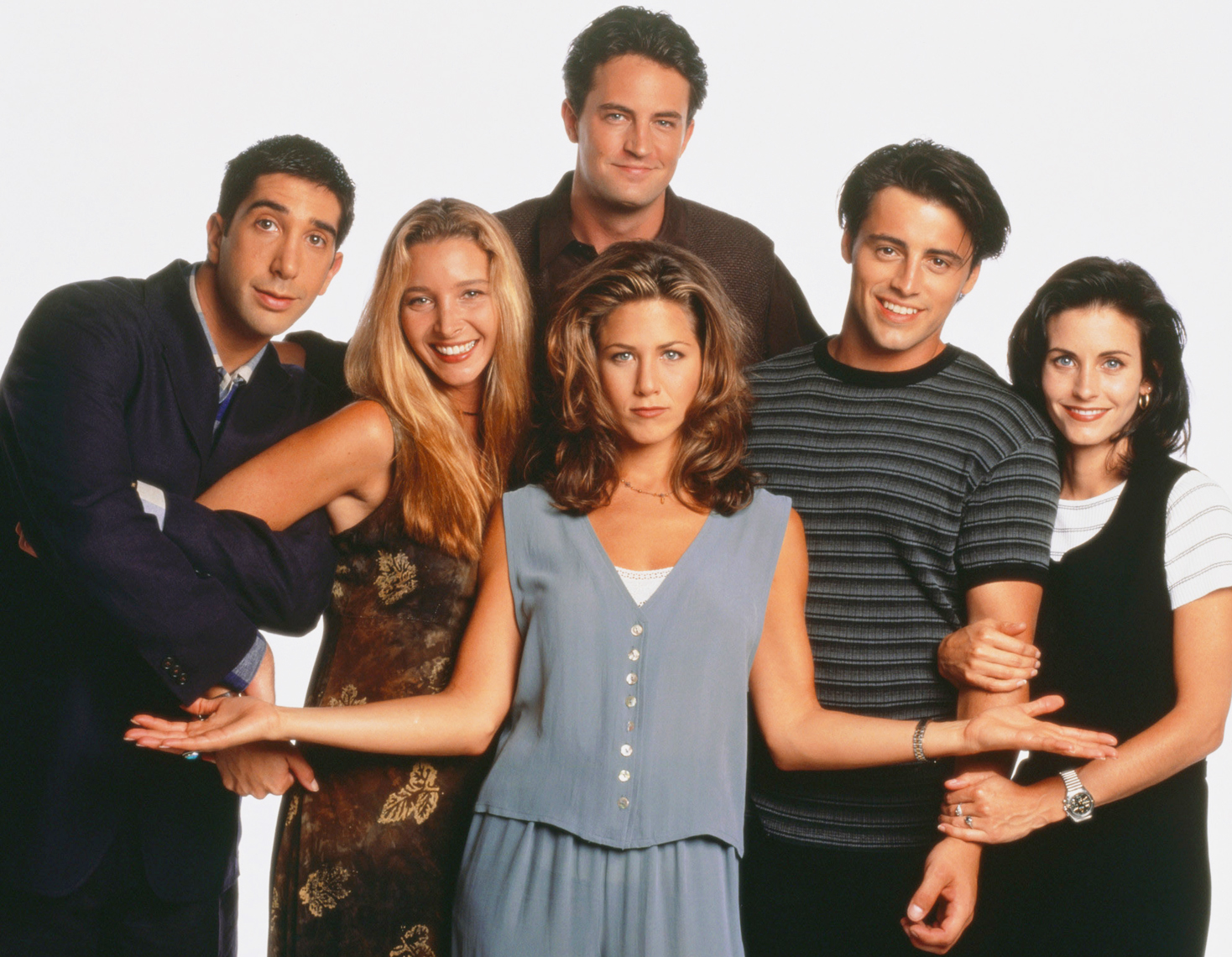
5 Screenwriting lessons from Friends

A key part of writing for television is watching television. And learning from it.
Screenwriting lessons from tackles series past and present, analyzing them through the prism of screenwriting.

It has been almost a decade since NBC’s Friends bowed out from our screens.
As the Blu-Ray/HD remasters of the show came out in the past few months, I decided to re-watch all ten seasons of one of the greatest television sitcoms in history.
It may appear dated at first glance, but the humor is still fresh, and the comedy lives on.


Lesson 1: Sitcom is about situation comedy

It seems a lot of contemporary comedies forget the very concept behind their existence.
As much as I enjoy 30 Rock, or even Big Bang Theory, a substantial portion of the jokes and humor is very derivative. This isn’t necessarily a bad thing (in small doses), but when all you can offer is references and pop-culture callbacks, you’re missing out on the actual definition of the genre you’re in. Situation Comedy.
Another upside to limiting references is, simply put, increased playback value. The content ends up being very accessible to a wide audience. If you don’t know anything about the Hunger Games trilogy (either now or in ten years), you may not be entertained by the recent Community episode. Friends was perhaps one of the most “sitcom” sitcoms. You don’t need a pop-culture dictionary to “get it.” A lot of the humor of the show stemmed from interesting and/or comedic situations between the various characters. In other words, life.
One of the best episodes of the series is undoubtedly “The One Where Everybody Finds Out.” To recap, Monica and Chandler have had a semi-secret relationship and have been trying to hide it from the other friends. As the title of the episode indicates (spoiler alert), everyone ends up finding out about the couple. The real power of the show is to turn what amounts to a TV trope (friends trying to hide their secret romantic relationship) into a legitimately funny and fresh concept. The idea is not new, but the execution is ridiculously fun. There’s a key scene in the show where Phoebe and Chandler are testing each other out to see who knows what about the secret, and we (the audience) know the truth. In that moment, the laughs come from the imbroglio within the situation. We know, they know, but no one wants to admit it. Comedy in the situation. Which brings us to my next point…

Lesson 2: Humor must make way to emotion

An often overlooked facet of comedies is the emotional component. The climax of the Friends scene I just mentioned is not the jokes milked from the concept (Phoebe v. Chandler), rather the honest truth behind the scene: Chandler’s true feelings towards Monica. As Phoebe is about to kiss Chandler, he finally admits that he is actually in love with Monica. The comedic situation turns into a pivotal “can’t-miss” moment based on the characters. All of this comedic build-up is meaningless if it is not attached to something real. You can make as many jokes about Chandler being gay, but they’re rooted to the character’s insecurities with women. Without the emotional baggage (and out of this context), they may seem childish (if not downright offensive).
Truth in characters also means truth in emotions. If we look at another comedy, Modern Family is very successful in part thanks to its emotional resonance. People can recognize themselves (or their family) in the Pritchetts. The same can be said about our “Friends.” We can engage with their stories, and lives, because most likely we have lived through similar experiences. In ten seasons, it would be hard not to come up with a single example.

Lesson 3: Character arcs surpass story arcs

It may seem redundant with the previous lesson, but I thought it was important to distinguish emotional/character moments in scenes versus full-blown arcs over the course of several episodes/seasons. More importantly, it may seem counter-intuitive to disregard story arcs, yet it is especially true for sitcoms that, in the long run, characters prevail over story. A multi-cam, by its very definition, has a much more limited scope than its single-cam counterpart (location, visuals, production, etc.). This means that choices have to be made from the get-go (i.e. the script) about how the story is going to unfold. It then makes perfect sense that the focus will end up being on the characters rather than, say, the locale.
What you end up remembering from Friends is Ross and Rachel’s on-and-off tumultuous relationship throughout the years, not the many (fancy) jobs of Rachel. You remember Chandler’s evolution from man-child to husband. Sure, you may fondly look back on “that one trip to England” (aka “The One with Ross’s Wedding”), but what sticks is the pay-off from a character’s stand-point (in this case, Chandler and Monica beginning a relationship). “The One After the Superbowl” is often derided and considered one of the worst episodes because of this very issue. No one cared about the stunt-casting and crazy LA peripeties. Ultimately, small-scale wins.
Does that mean you should just abandon story arcs? Hell no. One arc does not mean you overlook the other. They are both interconnected. Context is important within a comedy, you need a story before you get to the point of it. Where the distinction lies is simply the reason why viewers will be watching your show. Although it may be fun to follow Phoebe’s wacky adventures, what we care about is her reactions to said adventures.

Lesson 4: Don’t be dependent on the laugh-track

One of the reasons given behind the seeming decline of classic multi-camera sitcoms in the last decade has been the over-usage of the laugh-track. More specifically, as a crutch to the constant jokes ([insert laugh]). Yes, the show is filmed in front of a live audience, but laugh-tracks are used. In fact, after watching a decade’s worth of Friends, I started noticing halfway through the show very noticeable, particular, recurring laughs (also used now in How I Met Your Mother). Are people trying to over-compensate for something?
It is important to note here that there is a difference between relying on live audience and relying on a laugh-track. Multi-camera sitcoms are re-written on the fly to suit the audience’s appreciation of the humor. More times than not, laugh-tracks are used to impress upon you that this moment is funny, and you’re wrong for not laughing (Peter Griffin would say that it insists upon itself). Although one of the kings of laugh-tracks, Friends used it sparingly to reinforce genuinely comedic moments.
The content of a multi-camera sitcom should be tailored, not to coincide with the “beat” of a subsequent laugh, but simply to its context. In other words, you should write a script without thinking about where the laugh-track would go. It may sound obvious, but I know a few people who picture the finished product in their mind while writing it, which may end up being a derailing element.
Write what entertains you, not what you think others will be entertained by.

Lesson 5: Theatricality!

If you think about it, the format of a multi-camera situation comedy seems fairly odd (within a television mind-frame). “Live” fiction taped in front of a live audience which is re-written on the fly, then edited and finally broadcast for the world to see. In truth, a multi-cam is the closest analogous art-form to actual theater. I would argue that classic sitcoms nowadays have “lost” this idea and are focusing on, say, puns or references rather than theatricality (see the first lesson learned).
As we’ve seen, Friendstour de force was that, on top of its running storylines and other clever jokes, the entire framework of the show (especially after its first couple of seasons) truly revolved around the interaction between the characters and with the audience. This went beyond the simple comedic situations. The clearest case of that is undoubtedly Ross’ antics. It may be hit or miss for you (perhaps even over-done in the second half of the series), but its importance to the character and the show’s humor is undeniable. The bumbling professor’s physicality, the way he interacts with his surroundings, or express his sentiments, are all part of his own theatricality. This may seem like something that is entirely dependent on the actor(s) and the directing, but the reality is that much of it is relevant to writing. More specifically, the scenery and set-up. A talented actor will enhance the content and bring to life a character that should be inherently funny on the page. You too can use the stage, on your page.

What to take from the show

The key to a successful multi-camera sitcom, both on a creative and popular level, seems simple: stay true to your stories, stay true to your dialogue, and stay true to your emotions. Play with the situation, the characters, and the audience. Humor can be everlasting if, even taken out of its context, laughs can be had.