facebook_pixel Press "Enter" to skip to content

Looking to start your TV writing journey?

Posts tagged as “NBC”

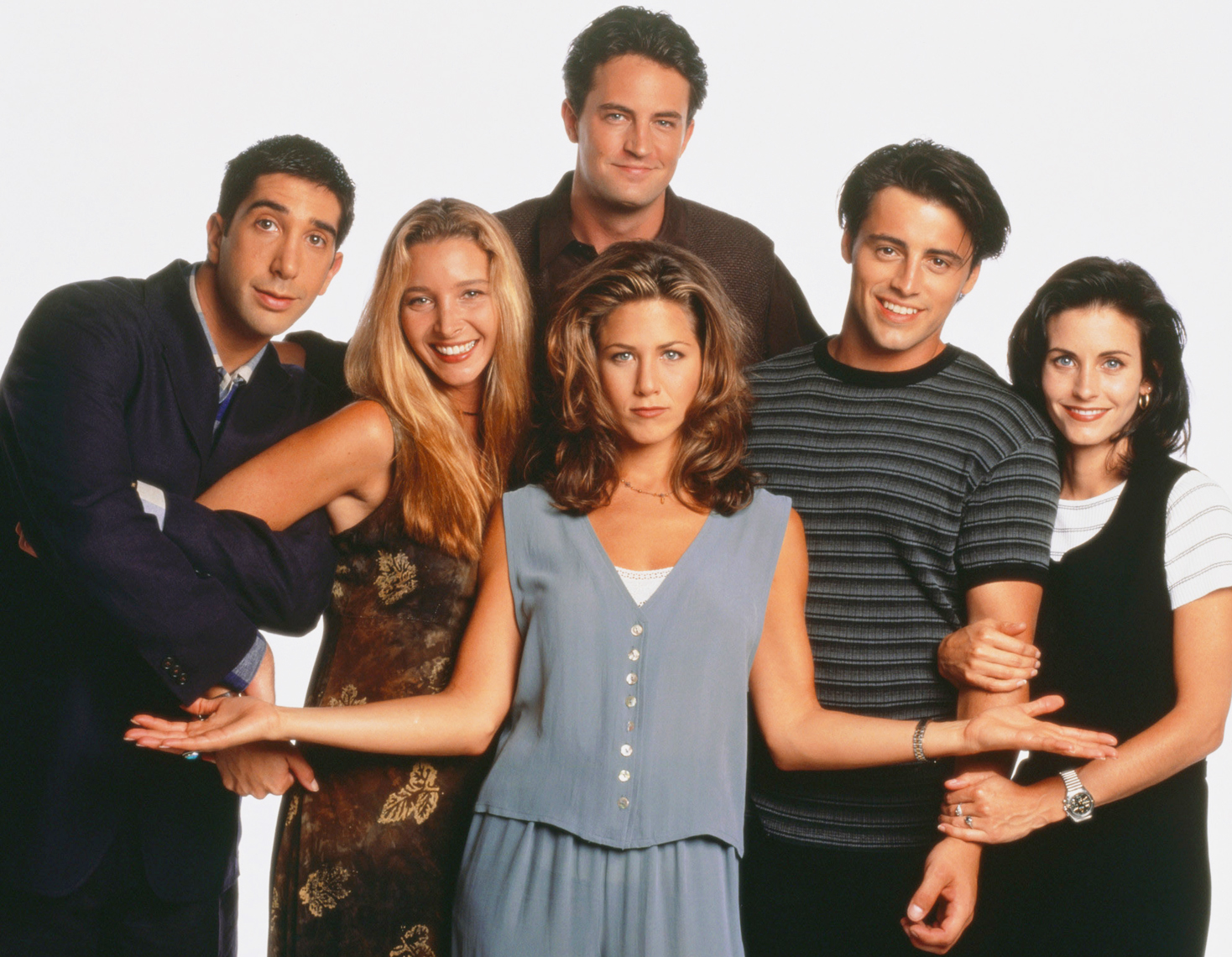
5 Screenwriting lessons from Friends

A key part of writing for television is watching television. And learning from it.
Screenwriting lessons from tackles series past and present, analyzing them through the prism of screenwriting.

It has been almost a decade since NBC’s Friends bowed out from our screens.
As the Blu-Ray/HD remasters of the show came out in the past few months, I decided to re-watch all ten seasons of one of the greatest television sitcoms in history.
It may appear dated at first glance, but the humor is still fresh, and the comedy lives on.

Lesson 1: Sitcom is about situation comedy

It seems a lot of contemporary comedies forget the very concept behind their existence.
As much as I enjoy 30 Rock, or even Big Bang Theory, a substantial portion of the jokes and humor is very derivative. This isn’t necessarily a bad thing (in small doses), but when all you can offer is references and pop-culture callbacks, you’re missing out on the actual definition of the genre you’re in. Situation Comedy.
Another upside to limiting references is, simply put, increased playback value. The content ends up being very accessible to a wide audience. If you don’t know anything about the Hunger Games trilogy (either now or in ten years), you may not be entertained by the recent Community episode. Friends was perhaps one of the most “sitcom” sitcoms. You don’t need a pop-culture dictionary to “get it.” A lot of the humor of the show stemmed from interesting and/or comedic situations between the various characters. In other words, life.
One of the best episodes of the series is undoubtedly “The One Where Everybody Finds Out.” To recap, Monica and Chandler have had a semi-secret relationship and have been trying to hide it from the other friends. As the title of the episode indicates (spoiler alert), everyone ends up finding out about the couple. The real power of the show is to turn what amounts to a TV trope (friends trying to hide their secret romantic relationship) into a legitimately funny and fresh concept. The idea is not new, but the execution is ridiculously fun. There’s a key scene in the show where Phoebe and Chandler are testing each other out to see who knows what about the secret, and we (the audience) know the truth. In that moment, the laughs come from the imbroglio within the situation. We know, they know, but no one wants to admit it. Comedy in the situation. Which brings us to my next point…

Lesson 2: Humor must make way to emotion

An often overlooked facet of comedies is the emotional component. The climax of the Friends scene I just mentioned is not the jokes milked from the concept (Phoebe v. Chandler), rather the honest truth behind the scene: Chandler’s true feelings towards Monica. As Phoebe is about to kiss Chandler, he finally admits that he is actually in love with Monica. The comedic situation turns into a pivotal “can’t-miss” moment based on the characters. All of this comedic build-up is meaningless if it is not attached to something real. You can make as many jokes about Chandler being gay, but they’re rooted to the character’s insecurities with women. Without the emotional baggage (and out of this context), they may seem childish (if not downright offensive).
Truth in characters also means truth in emotions. If we look at another comedy, Modern Family is very successful in part thanks to its emotional resonance. People can recognize themselves (or their family) in the Pritchetts. The same can be said about our “Friends.” We can engage with their stories, and lives, because most likely we have lived through similar experiences. In ten seasons, it would be hard not to come up with a single example.

Lesson 3: Character arcs surpass story arcs

It may seem redundant with the previous lesson, but I thought it was important to distinguish emotional/character moments in scenes versus full-blown arcs over the course of several episodes/seasons. More importantly, it may seem counter-intuitive to disregard story arcs, yet it is especially true for sitcoms that, in the long run, characters prevail over story. A multi-cam, by its very definition, has a much more limited scope than its single-cam counterpart (location, visuals, production, etc.). This means that choices have to be made from the get-go (i.e. the script) about how the story is going to unfold. It then makes perfect sense that the focus will end up being on the characters rather than, say, the locale.
What you end up remembering from Friends is Ross and Rachel’s on-and-off tumultuous relationship throughout the years, not the many (fancy) jobs of Rachel. You remember Chandler’s evolution from man-child to husband. Sure, you may fondly look back on “that one trip to England” (aka “The One with Ross’s Wedding”), but what sticks is the pay-off from a character’s stand-point (in this case, Chandler and Monica beginning a relationship). “The One After the Superbowl” is often derided and considered one of the worst episodes because of this very issue. No one cared about the stunt-casting and crazy LA peripeties. Ultimately, small-scale wins.
Does that mean you should just abandon story arcs? Hell no. One arc does not mean you overlook the other. They are both interconnected. Context is important within a comedy, you need a story before you get to the point of it. Where the distinction lies is simply the reason why viewers will be watching your show. Although it may be fun to follow Phoebe’s wacky adventures, what we care about is her reactions to said adventures.

Lesson 4: Don’t be dependent on the laugh-track

One of the reasons given behind the seeming decline of classic multi-camera sitcoms in the last decade has been the over-usage of the laugh-track. More specifically, as a crutch to the constant jokes ([insert laugh]). Yes, the show is filmed in front of a live audience, but laugh-tracks are used. In fact, after watching a decade’s worth of Friends, I started noticing halfway through the show very noticeable, particular, recurring laughs (also used now in How I Met Your Mother). Are people trying to over-compensate for something?
It is important to note here that there is a difference between relying on live audience and relying on a laugh-track. Multi-camera sitcoms are re-written on the fly to suit the audience’s appreciation of the humor. More times than not, laugh-tracks are used to impress upon you that this moment is funny, and you’re wrong for not laughing (Peter Griffin would say that it insists upon itself). Although one of the kings of laugh-tracks, Friends used it sparingly to reinforce genuinely comedic moments.
The content of a multi-camera sitcom should be tailored, not to coincide with the “beat” of a subsequent laugh, but simply to its context. In other words, you should write a script without thinking about where the laugh-track would go. It may sound obvious, but I know a few people who picture the finished product in their mind while writing it, which may end up being a derailing element.
Write what entertains you, not what you think others will be entertained by.

Lesson 5: Theatricality!

If you think about it, the format of a multi-camera situation comedy seems fairly odd (within a television mind-frame). “Live” fiction taped in front of a live audience which is re-written on the fly, then edited and finally broadcast for the world to see. In truth, a multi-cam is the closest analogous art-form to actual theater. I would argue that classic sitcoms nowadays have “lost” this idea and are focusing on, say, puns or references rather than theatricality (see the first lesson learned).
As we’ve seen, Friendstour de force was that, on top of its running storylines and other clever jokes, the entire framework of the show (especially after its first couple of seasons) truly revolved around the interaction between the characters and with the audience. This went beyond the simple comedic situations. The clearest case of that is undoubtedly Ross’ antics. It may be hit or miss for you (perhaps even over-done in the second half of the series), but its importance to the character and the show’s humor is undeniable. The bumbling professor’s physicality, the way he interacts with his surroundings, or express his sentiments, are all part of his own theatricality. This may seem like something that is entirely dependent on the actor(s) and the directing, but the reality is that much of it is relevant to writing. More specifically, the scenery and set-up. A talented actor will enhance the content and bring to life a character that should be inherently funny on the page. You too can use the stage, on your page.

What to take from the show

The key to a successful multi-camera sitcom, both on a creative and popular level, seems simple: stay true to your stories, stay true to your dialogue, and stay true to your emotions. Play with the situation, the characters, and the audience. Humor can be everlasting if, even taken out of its context, laughs can be had.

Drama Spec Script 2012 – What is hot and what is not


UPDATED:
A brand new 2019 list has been posted.
Click here to access it.


Like every year, it is now time to review which TV shows are good to spec, and which are not.
Dedicated posts will be made respectively for the best comedies (half-hour) and the best dramas (one-hour).
As the title says, this post is all about the dramas.
In addition, you’ll also find (when available) a script for the corresponding show.
Canceled or dead shows have been removed since last season’s spec list.

NEW ADDITION:
Given Warner Bros’ new rules for their fellowship, I have indicated with an asterisk (*) series that they will not accept specs for (mainly first-season shows).

Let’s do another quick recap of how the list works:
The shows are divided into five categories regarding their appeal to readers and how well they are known/read:
Over-specced (shows that have passed their prime, try to avoid doing them)
Mainstream (shows that have matured enough that they have become on-the-nose speccers–and a lot of people are speccing them)
Wild Cards (soon, everyone will spec those, maybe you can get a head start)
Outsiders (specs that will get you out from the pack)
Gamblers (risky shows that could pay off, or bomb)

There is also a grade regarding the show’s longevity in relation to its speccability.
Meaning, how long can you keep your spec script fresh without having to throw it in the trash?
To do this, we will use the greatest grading system on Earth; stars:
★★★★★ – Excellent
★★★★ – Very Good
★★★★★ – Average
★★★★★ – Fair
★★★★ – Poor

And here we go.

Over-Specced
Re-tool your spec if you have one, but you probably shouldn’t bother beginning a new one for these shows.

Burn Notice (USA)
Type: Light action procedural
The fact it’s entering its sixth season should give you an idea of why Burn Notice is here.
Longevity: ★★★★★ – Very formulaic but with enough of a twist to keep its fresh vibe.

CSI/Criminal Minds (CBS)
Type: Police procedurals
“Never give up, never surrender” should be their motto.
Longevity: ★★★★ – Past its prime for about five years now.

Dexter (Sho)
Type: Serialized crime drama
Following last season’s cliffhanger, it is hard to tell where the series is headed
Longevity: ★★★★★ – Only two seasons left.

Grey’s Anatomy/Private Practice/House (ABC/FOX)
Type: Medical procedurals
I’m going to bet a lot of people are able to say: “Been there, specced that”.
Longevity: ★★★★ – Virtually all medical storylines have already been explored through those three shows.

Mad Men (AMC)
Type: Serialized historical drama
“Out of sight, out of mind” does not hold true for the AMC classic that is still amongst the most popular.
Longevity: ★★★★★ – One of the over-specced shows with possibly the longest longevity factor attached to it. Doesn’t mean the competition isn’t fierce.

Mainstream
The current and new widespread shows in town that are getting read.

Boardwalk Empire (HBO)
Type: Serialized historical drama
A lot of people have fallen in love with Steve Buscemi’s eyes apparently.
Longevity: ★★★★ – A third season, good ratings, great cast, big producers.

Bones/Castle (FOX/ABC)
Type: Light police procedural
Possibly the last season in the mainstream category for Bones. Castle on the other hand probably has at least a few years ahead of it.
Longevity: ★★★★★ – One is renewed for an eighth season, the other is still awaiting its fate on a fifth.

Breaking Bad (AMC)
Type: Serialized character/family drama
One of the best shows on TV, and one of the hardest ones to spec.
Longevity: ★★★★★ – This is going be its last season, albeit cut in two, which gives a bonus year before you can say farewell to it.

Fringe (FOX)
Type: Science-fiction procedural
There’s only so much science-fiction shows on TV right now, and Fringe is clearly the go-to drama in its genre. This will probably be the last season where I can say it hasn’t been over-speced already.
Longevity: ★★★★ – Highly volatile.

Glee (FOX)
Type: Light serialized high-school dramedy
As popular in the spec world as on TV, the danger of a Glee spec continues to be that a major part of it will end up being lyrics. Some people might take that for laziness.
Longevity: ★★★★★ – Beware: major cast overhaul upcoming.

The Good Wife (CBS)
Type: Legal procedural
A very smart show to spec, if only for its near-perfect hybrid mix of procedural and serialization. Plus it’s on a network, which makes it more well-known than some of its cable counterpart.
Longevity: ★★★★ – A slow-burner that will probably garner a few more seasons.

Gossip Girl/90210 (The CW)
Type: Teen dramas
Last season for at least one of the two as being considered “mainstream”. Perhaps there are better show alternatives to consider.
Longevity: ★★★★★ – Potentially entering its sixth season this fall, Gossip Girl has still some life left into it. 90210 continues to be hit or miss on the cancellation scale.

Hawaii Five-0 (CBS)
Type: Police/Action procedural
As expected last season, Hawaii Five-0 has become a great action-procedural mainstream spec to add to your arsenal.
Longevity: ★★★★ – Renewed and with a long life ahead of it.

Justified (FX)
Type: Police procedural
Justified is another series that completely exploded into the Mainstream category and has become one of the top specced show around.
Longevity: ★★★★ – A fourth season is upcoming, and me thinks it will keep on going.

The Mentalist (CBS)
Type: Police procedural
In its prime.
Longevity: ★★★★ – Already going on to its fifth season, The Mentalist is still the most solid police procedural around.

NCIS:LA (CBS)
Type: Police/Action procedural
Similar to Hawaii Five-0, NCIS:LA seems to deliver to people looking for an action/police hybrid drama.
Longevity: ★★★★ – Let me guess; renewed?

Sons of Anarchy (FX)
Type: Serialized ensemble drama
Similar to Breaking Bad, Sons of Anarchy‘s serialized elements may prove difficult to spec. With that said, the FX series has definitely grown into becoming a high speccer.
Longevity: ★★★★★ – Those storylines, they keep on moving!

True Blood (HBO)
Type: Serialized fantasy drama
Although on the verge of being overspecced, the (supposed) unpredictability of the show makes it prone to fresh takes on the main characters. Or so they say.
Longevity: ★★★★★ – The upcoming season is the last for Alan Ball, and the show is catching up on the books. Be careful.

The Vampire Diaries (The CW)
Type: Serialized fantasy drama
On paper, it seems like a great, popular choice when it comes to fantasy series, with that said…
Longevity: ★★★★★ – …the constant flux in storylines may make you mad enough that you’d want to avoid speccing this one.

The Walking Dead (AMC)
Type: Ensemble/horror drama
Undeniably a very popular show, both on screen and on the page. The strong stand-alone aspect of the series makes it prone to lessen the serialized elements within your spec.
Longevity: ★★★★ – Regardless of your stance about how good or bad the show is, it’s not going anywhere anytime soon.

Wild Cards
Not quite fully widespread but will get there given the chance.

Game of Thrones (HBO) *
Type: Serialized fantasy drama
People think they can easily write great adaptations, which makes Game of Thrones the best candidate for top-specced show of 2013. But just because you love the book doesn’t mean you can write it. And there’s also this small issue of coming up with original stand-alone stories not found in the novels.
Longevity: ★★★★ – Hugely successful and over six books. Enough said.

Homeland (Sho) *
Type: Serialized thriller
The Showtime series made it surprisingly big last season, which inevitably transformed it into a popular spec show.
Longevity: ★★★★ – The serialization may put some people off, but it shouldn’t be that difficult to craft an episode around a specific subset of Abu Nazir’s terrorist plot (oh, look, free advice).

Leverage (TNT)
Type: Light heist/con/action procedural
Take it now before it goes over the hill.
Longevity: ★★★★★ – Five seasons and still going strong; however, the amount of original cons left are dwindling by the episode.

Nikita (The CW)
Type: Action/spy procedural
The only spy drama option as of now (that will surely change next year).
Longevity: ★★★★ – Average ratings and a pricey show means The CW could pull the plug, but Nikita is almost its only viable alternative series to the teen dramas.

Once Upon A Time (ABC) *
Type: Fantasy family drama
The most family-friendly show on this list, OUAT will probably be very specced by this time next year.
Longevity: ★★★★★ – A near-infinite pool of fairy tales coupled with big ratings means ABC has found its new long-standing drama.

Parenthood (NBC)
Type: Serialized family drama
First world problems: family edition.
Longevity: ★★★★★ – The serialized nature of Parenthood makes it hard to create a true stand-alone storyline, but a renewal is quasi-certain.

Person of Interest (CBS) *
Type: Crime procedural
The sci-fi touch is light but nonetheless makes Person of Interest an interest new addition to the crime procedural arena.
Longevity: ★★★★ – Renewal is a done deal.

Revenge (ABC) *
Type: Serialized family drama
The ultimate breakout soap of the past season, Revenge will clearly become a great series to spec…
Longevity: ★★★★★ – …depending on where the dominoes will fall at the end of this season.

The Secret Circle (The CW) *
Type: Serialized fantasy drama
If you feel The Vampire Diaries has been overdone, then this is for you.
Longevity: ★★★★ – Is it going to last? Two words: Kevin Williamson

Smash (NBC)
Type: Serialized musical drama
Make way for another musical series. Unlike Glee, you can showcase your lyrics talent given the show’s use of original songs.
Longevity: ★★★★ – Already renewed.

Touch (FOX) *
Type: Serialized fantasy/family drama
It is probably too soon to begin thinking about writing a spec for this mid-season show.
Longevity: ★★★★ – There’s too much serendipity in Touch for me to care, but at least it adds an interesting dynamic to the usual “problem-solving” storyline.

Treme (HBO)
Type: Serialized historical drama
Even if Treme is not that well known to be a good stand-out spec, let’s just say going toe-to-toe with David Simon is not recommended.
Longevity: ★★★★ – A third seasons premiering this fall and a fourth one already planned; looks like New Orleans is en vogue.


Outsiders
The shows (mostly cable) you may be tempted to take a risk on, getting you on top of the reading pile. Beyond that, it depends on the willingness of the reader and his/her knowledge of the show. Who knows, maybe the showrunner is into less popular shows and will value your risk-taking.

Hart of Dixie (The CW) *
Type: Serialized medical/family drama
If you’re aiming for broad appeal with a cute soapesque family/medical drama, Hart of Dixie will suit you just fine.
Longevity: ★★★★★ – More WB than CW, the series will most likely always be on the bubble.

Psych (USA)
Type: Light crime procedural
A little less used (and known) than its spy counterpart making it not quite as overspecced.
Longevity: ★★★★★Psych‘s run is impressive, with a recent renewal for another full-16 episode season order, continuing its records as the longest-running series on USA Nework.

Southland (TNT)
Type: Police procedural
Southland offers a great option in the “edgy/realistic” police drama procedural.
Longevity: ★★★★★ – Once upon a time, the show was on its deathbed. It is now a popular basic-cable drama, in more ways than one.

Warehouse 13 (Syfy)
Type: Science-fiction procedural
Despite growing old, there are almost no purely procedural contenders in this genre. Like Eureka, Warehouse 13 will probably keep this slot until it bites the dust.
Longevity: ★★★★★ – You can never tell what crazy move Syfy will do next to shoot itself in the head.

White Collar (USA)
Type: Light crime procedural
A clear new winner for the blue-sky dramas from USA.
Longevity: ★★★★ – No way Jose that this show is biting the dust anytime soon.

Gamblers
For one reason or another, these are much riskier specs to do right now. You have been warned.

Blue Bloods (CBS)
Type: Police/family drama
Blue Bloods is still too much under the radar to be considered as a main spec to send out, however the series offers an interesting family/procedural dynamic not really found on any other network shows.
Longevity: ★★★★★ – It’s on Fridays, so you can never know for sure.

Body of Proof/Harry’s Law (ABC/NBC)
Type: Medical/Legal procedurals
The shows are fairly weak to begin with, so trying to break out of the crowd by speccing either of them is disrespectful to your writing.
Longevity: ★★★★★ – Even if renewed, it would be quite hard to write a compelling episode.

Forty-five shows are listed this year and, like last season, a few things can be observed.

Network dramas are coming back in force, slowly eating away the piece of older, aging cable dramas from the big five (AMC, FX, Syfy, USA, and TNT). HBO continues to be home to bigger, grander series that are always more hazardous to spec. NBC continues to be absent for the most part, while CBS and (surprisingly) ABC are taking over the lion share, leaving FOX in the wind.

A clear trend is forming this time around when it comes to popular specced show: serialization.
With a growing and fiercer competition, people are ready to take more risks with bolder choices. Stand-alone procedurals have mostly fallen out of favor for most people, even diminishing the light character serialized dramas’ dominance of the past few years.
Interestingly enough, “fresh is best” seems also to be a new intrinsic concept for now, with first and second-season series being extremely popular out of the gate.

With pilots being the most requested samples, are we moving towards “throwaway specs”, lasting merely a season?
Fudging with mythology, choosing new shows, the classic spec rules are slowly starting to fade away.

Serial or not, as long as a script and the show reflect your voice, it ends up being all about the writing.
Make your choice.

Click here for the Comedy Spec Script list.

Comedy Spec Script 2012 – What is hot and what is not


UPDATED:
A brand new 2019 list has been posted.
Click here to access it.


Like every year, it is now time to review which TV shows are good to spec, and which are not.
Dedicated posts will be made respectively for the best comedies (half-hour) and the best dramas (one-hour).
As the title says, this post is all about the comedies.
In addition, you’ll also find (when available) a script for the corresponding show.
Canceled or dead shows have been removed since last season’s spec list.

NEW ADDITION:
Given Warner Bros’ new rules for their fellowship, I have indicated with an asterisk (*) series that they will not accept specs for (mainly first-season series).

Here is a quick recap of how the list works:
The shows are divided into five categories regarding their appeal to readers and how well they are known/read:
Over-specced (shows that have passed their prime, try to avoid doing them)
Mainstream (shows that have matured enough that they have become on-the-nose speccers–and a lot of people are speccing them)
Wild Cards (soon, everyone will spec those, maybe you can get a head start)
Outsiders (specs that will get you out from the pack)
Gamblers (risky shows that could pay off, or bomb)

There is also a grade regarding the show’s longevity in relation to its speccability.
Meaning, how long can you keep your spec script fresh without having to throw it in the trash?
To do this, we will use the greatest grading system on Earth; stars:
★★★★★ – Excellent
★★★★ – Very Good
★★★★★ – Average
★★★★★ – Fair
★★★★ – Poor

Let’s get started.

Over-Specced
Re-tool your spec if you have one, but you probably shouldn’t bother beginning a new one for these shows.

30 Rock (NBC)
Going strong with its sixth season currently airing, the show is still the to-go one when it comes to single-camera comedies. Which means additional competition within the very competitive field of spec writing.
Longevity: ★★★★★ – How many original ideas are left to tackle?

How I Met Your Mother (CBS)
Renewed for an additional two more (final?) seasons, HIMYM has been for a while, and probably will continue to be, an interesting hybrid animal in the spec world.
Longevity: ★★★★★ – It is clear that speccing an 8-season plus show is not the greatest idea. Would you have done a Friends spec around their seventh season?

It’s Always Sunny in Philadelphia (FX)
The format of Philly, although fairly unique for its time, has been put through every mold and peripeties imaginable. Writing a new spec may make you late to the party.
Longevity: ★★★★★ – Ten seasons and three movies?

The Office (NBC)
The change of cast brought a fresh perspective to the near-decade old show but it is kind of too little too late in the originality department.
Longevity: ★★★★★ – On its death bed with the inevitable Dwight spin-off.

Two and a Half Men (CBS)
If you’re that desparate for a Chuck Lorre-related spec, there are better choices out there.
Longevity: ★★★★★ – The Ashton Kutcher switcheroo brought new life to the series, which will probably make it last a few more seasons.

Weeds (Sho)
Despite the first two seasons being pretty straightforward and very speccable, the show has changed so much over the years that it’s hard to predict what misadventures are up next.
Longevity: ★★★★ – Dead show walking.

Mainstream
The current and new widespread shows in town that are getting read.

Archer (FX)
One of the best, if not the best contender in the animation comedy category.
Longevity: ★★★★ – Three seasons under its belt, a strong track-record of quality episodes; looks like the up-and-comer has become in vogue.

The Big Bang Theory (CBS)
If you’re thinking of a classic sitcom in its prime, this is the one. Careful though as it may go over the overspec hill pretty fast.
Longevity: ★★★★★ – One more season means twenty less storylines available, but don’t let this detract you from the most popular sitcom around.

Community (NBC)
A dangerous show to spec, if only for its tricky “on the nose” storytelling/dialogue, and the fact that it is always bordering cancellation.
Longevity: ★★★★★ – Tread very carefully.

Cougar Town/The Middle (ABC)
Surprisingly enough, despite being very low-key on either coasts, these two shows have begun what one might call a cult speccing trend.
Longevity: ★★★★★ – Never underestimate the under-underdogs.

Modern Family (ABC)
A mainstream single-cam that has matured enough to become the new king of comedy world.
Longevity: ★★★★ – What a joke it would be if the show were to get canceled.

Parks and Recreation (NBC)
Not only is it one of the best comedies around, it is still very fresh and very popular.
Longevity: ★★★★ – Beware of the constant flux within the characters’ dynamics.

Raising Hope (FOX)
This one is quickly becoming a very popular series to spec, thanks to its atypical humor.
Longevity: ★★★★ – Despite dips in ratings, it looks unlikely that FOX will cancel Raising Hope for at least another season.

Wild Cards
Not quite fully widespread but will get there given the chance.

Eastbound & Down (HBO)
Gathering cult status.
Longevity: ★★★★ – The show’s third season has been announced as being the last. Send it out while you can.

Happy Endings (ABC)
Its countless meta pop-culture references may be reminiscent of Community, but unlike its NBC counterpart, the ABC shows deals with contemporary pop-culture instead of cultish/classic trends.
Longevity: ★★★★★ – With three other “group” comedies premiering the same season, no one expected Happy Endings to not only do as well as it did, but also be as good as it is. It’s the little network show that could, and does.

Mike & Molly (CBS)
Another classic multi-cam comedy that hasn’t been tapped to its fullest potential.
Longevity: ★★★★ – With McCarthy’s new-found success, CBS will have a hard time justifying a cancellation of the sitcom.

New Girl (FOX) *
First we had Modern Family, then Raising Hope, and now New Girl. Watch out, we got a badass over here.
Longevity: ★★★★ – Renewed without any surprise.

Suburgatory (ABC) *
A great light and fun family comedy that fits right in the ABC comedy line.
Longevity: ★★★★ – Inventive and renewed; what more can you ask?

Two Broke Girls (CBS) *
If you like making racist jokes, the choice has been made for you. Just kidding?
Longevity: ★★★★ – It’s a done deal on the renewal.

Up All Night (NBC) *
The new show under everybody’s radar, yet with one of the strongest comedy casts around.
Longevity: ★★★★★ – Although a lukewarm track-record, it is doubtful that NBC will cancel this one for now.

Outsiders
The shows (mostly cable) you may be tempted to take a risk on, getting you on top of the reading pile. Beyond that, it depends on the willingness of the reader and his/her knowledge of the show. Who knows, maybe the showrunner is into less popular shows and will value your risk-taking.

House of Lies*/Nurse Jackie (Sho)
Despite seeming like ridiculous contenders, Nurse Jackie specs have gone surprisingly far in various fellowships. And House of Lies‘ freshness, coupled with its hyper-cast, gives the Sho show potential for a strong script.
Longevity: ★★★★★ – Emmy-winning this, Oscar-nominated that. Two dramedies that are not going anywhere for the next few months, or years.

The League (FX)
The macho-man show has transformed into a great outsider spec.
Longevity: ★★★★★ – Recently renewed for a fourth season, The League may not go past another couple of seasons given the cast’s career trajectory.

Gamblers
For one reason or another, these are much riskier specs to do right now. You have been warned.

Childrens’ Hospital/NTSF:SD:SUV/Eagleheart (Cartoon Network/Adult Swim) *
None of them are strictly speaking half-hours, so it would be quite tough for any of these shows to be sufficient by themselves.
Longevity: ★★★★★ – They’re dirt cheap enough to not be canceled soon.

The Life and Times of Tim (HBO) *
Like the Adult Swim block, Tim is not only amongst the most un-politically correct show on this list, but more importantly is in a short-form structure that might not appeal to the mass spec market.
Longevity: ★★★★★ – Saved from the dead at the last minute this past season, it is unclear if a miracle can be pulled twice in a row.

Once again, it seems the comedy landscape is outshining this year the drama side with its many choices.
Following last season’s footsteps into marking their comedy territory, both ABC’s and FOX’s lineups are giving NBC a run for their (lack of) money. Parks & Rec, 30 Rock, The Office and (ironically?) Community are still the most popular specs, but it’s become clear that the alternatives will soon take the top seat. While the big dogs are fighting, the cable world is slowly pushing its underdogs to the top. Who’d have thought Archer would be the mainstream animation show when it premiered?
With Eastbound and probably Tim gone by next season, HBO is left in the wind in the face of Sho’s dramedies (which, for the most part, are strangely categorized as dramas). Meanwhile, Lorre is still reigning supreme over multi-cams while they are, little by little, slowly phased out from our screens.
The tone has been set.

Click here for the Drama Spec Script list.