facebook_pixel Press "Enter" to skip to content

Looking to start your TV writing journey?

Posts tagged as “TV Shows”

5 Screenwriting lessons from Friends

A key part of writing for television is watching television. And learning from it.
Screenwriting lessons from tackles series past and present, analyzing them through the prism of screenwriting.

It has been almost a decade since NBC’s Friends bowed out from our screens.
As the Blu-Ray/HD remasters of the show came out in the past few months, I decided to re-watch all ten seasons of one of the greatest television sitcoms in history.
It may appear dated at first glance, but the humor is still fresh, and the comedy lives on.
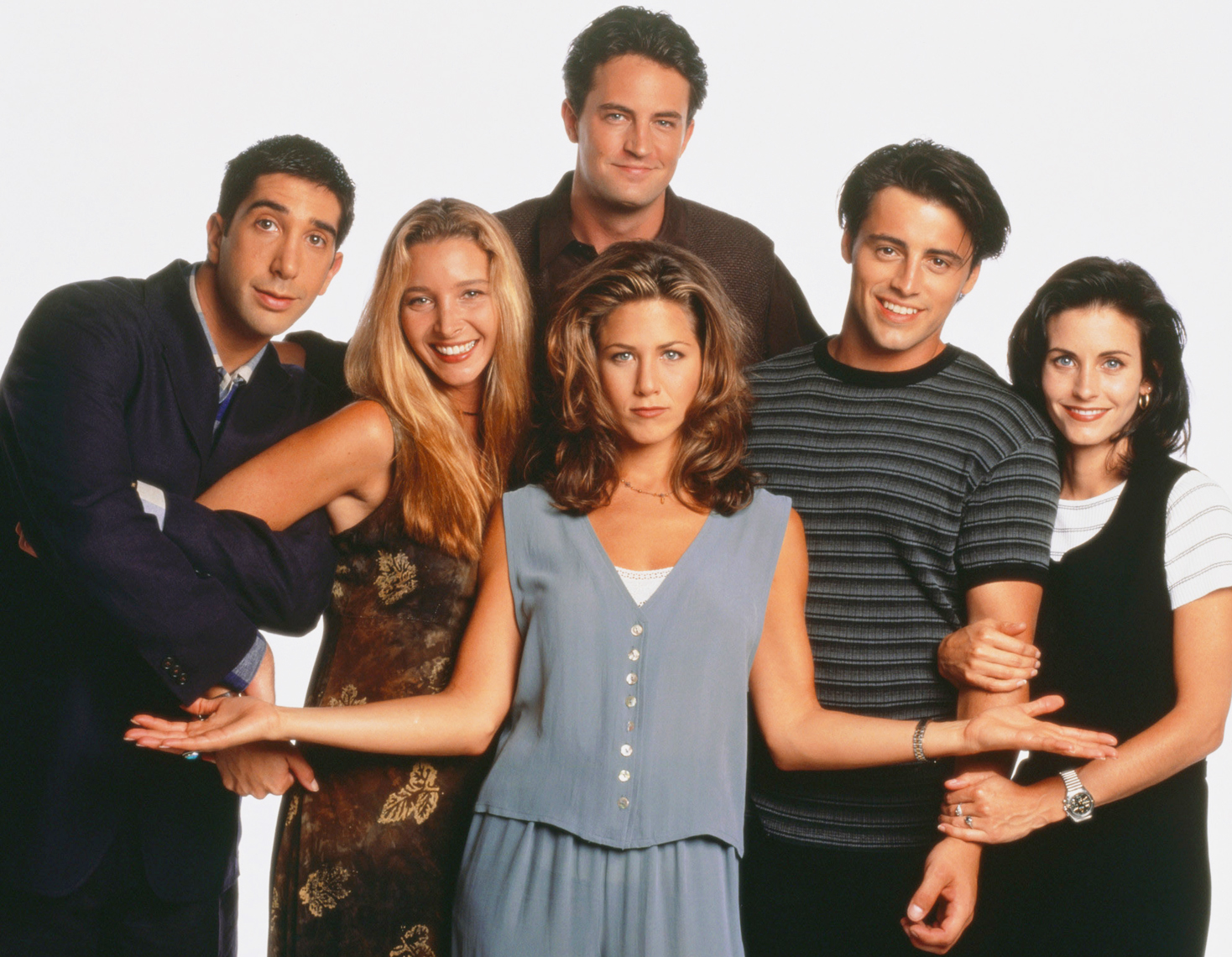

Lesson 1: Sitcom is about situation comedy

It seems a lot of contemporary comedies forget the very concept behind their existence.
As much as I enjoy 30 Rock, or even Big Bang Theory, a substantial portion of the jokes and humor is very derivative. This isn’t necessarily a bad thing (in small doses), but when all you can offer is references and pop-culture callbacks, you’re missing out on the actual definition of the genre you’re in. Situation Comedy.
Another upside to limiting references is, simply put, increased playback value. The content ends up being very accessible to a wide audience. If you don’t know anything about the Hunger Games trilogy (either now or in ten years), you may not be entertained by the recent Community episode. Friends was perhaps one of the most “sitcom” sitcoms. You don’t need a pop-culture dictionary to “get it.” A lot of the humor of the show stemmed from interesting and/or comedic situations between the various characters. In other words, life.
One of the best episodes of the series is undoubtedly “The One Where Everybody Finds Out.” To recap, Monica and Chandler have had a semi-secret relationship and have been trying to hide it from the other friends. As the title of the episode indicates (spoiler alert), everyone ends up finding out about the couple. The real power of the show is to turn what amounts to a TV trope (friends trying to hide their secret romantic relationship) into a legitimately funny and fresh concept. The idea is not new, but the execution is ridiculously fun. There’s a key scene in the show where Phoebe and Chandler are testing each other out to see who knows what about the secret, and we (the audience) know the truth. In that moment, the laughs come from the imbroglio within the situation. We know, they know, but no one wants to admit it. Comedy in the situation. Which brings us to my next point…

Lesson 2: Humor must make way to emotion

An often overlooked facet of comedies is the emotional component. The climax of the Friends scene I just mentioned is not the jokes milked from the concept (Phoebe v. Chandler), rather the honest truth behind the scene: Chandler’s true feelings towards Monica. As Phoebe is about to kiss Chandler, he finally admits that he is actually in love with Monica. The comedic situation turns into a pivotal “can’t-miss” moment based on the characters. All of this comedic build-up is meaningless if it is not attached to something real. You can make as many jokes about Chandler being gay, but they’re rooted to the character’s insecurities with women. Without the emotional baggage (and out of this context), they may seem childish (if not downright offensive).
Truth in characters also means truth in emotions. If we look at another comedy, Modern Family is very successful in part thanks to its emotional resonance. People can recognize themselves (or their family) in the Pritchetts. The same can be said about our “Friends.” We can engage with their stories, and lives, because most likely we have lived through similar experiences. In ten seasons, it would be hard not to come up with a single example.

Lesson 3: Character arcs surpass story arcs

It may seem redundant with the previous lesson, but I thought it was important to distinguish emotional/character moments in scenes versus full-blown arcs over the course of several episodes/seasons. More importantly, it may seem counter-intuitive to disregard story arcs, yet it is especially true for sitcoms that, in the long run, characters prevail over story. A multi-cam, by its very definition, has a much more limited scope than its single-cam counterpart (location, visuals, production, etc.). This means that choices have to be made from the get-go (i.e. the script) about how the story is going to unfold. It then makes perfect sense that the focus will end up being on the characters rather than, say, the locale.
What you end up remembering from Friends is Ross and Rachel’s on-and-off tumultuous relationship throughout the years, not the many (fancy) jobs of Rachel. You remember Chandler’s evolution from man-child to husband. Sure, you may fondly look back on “that one trip to England” (aka “The One with Ross’s Wedding”), but what sticks is the pay-off from a character’s stand-point (in this case, Chandler and Monica beginning a relationship). “The One After the Superbowl” is often derided and considered one of the worst episodes because of this very issue. No one cared about the stunt-casting and crazy LA peripeties. Ultimately, small-scale wins.
Does that mean you should just abandon story arcs? Hell no. One arc does not mean you overlook the other. They are both interconnected. Context is important within a comedy, you need a story before you get to the point of it. Where the distinction lies is simply the reason why viewers will be watching your show. Although it may be fun to follow Phoebe’s wacky adventures, what we care about is her reactions to said adventures.

Lesson 4: Don’t be dependent on the laugh-track

One of the reasons given behind the seeming decline of classic multi-camera sitcoms in the last decade has been the over-usage of the laugh-track. More specifically, as a crutch to the constant jokes ([insert laugh]). Yes, the show is filmed in front of a live audience, but laugh-tracks are used. In fact, after watching a decade’s worth of Friends, I started noticing halfway through the show very noticeable, particular, recurring laughs (also used now in How I Met Your Mother). Are people trying to over-compensate for something?
It is important to note here that there is a difference between relying on live audience and relying on a laugh-track. Multi-camera sitcoms are re-written on the fly to suit the audience’s appreciation of the humor. More times than not, laugh-tracks are used to impress upon you that this moment is funny, and you’re wrong for not laughing (Peter Griffin would say that it insists upon itself). Although one of the kings of laugh-tracks, Friends used it sparingly to reinforce genuinely comedic moments.
The content of a multi-camera sitcom should be tailored, not to coincide with the “beat” of a subsequent laugh, but simply to its context. In other words, you should write a script without thinking about where the laugh-track would go. It may sound obvious, but I know a few people who picture the finished product in their mind while writing it, which may end up being a derailing element.
Write what entertains you, not what you think others will be entertained by.

Lesson 5: Theatricality!

If you think about it, the format of a multi-camera situation comedy seems fairly odd (within a television mind-frame). “Live” fiction taped in front of a live audience which is re-written on the fly, then edited and finally broadcast for the world to see. In truth, a multi-cam is the closest analogous art-form to actual theater. I would argue that classic sitcoms nowadays have “lost” this idea and are focusing on, say, puns or references rather than theatricality (see the first lesson learned).
As we’ve seen, Friendstour de force was that, on top of its running storylines and other clever jokes, the entire framework of the show (especially after its first couple of seasons) truly revolved around the interaction between the characters and with the audience. This went beyond the simple comedic situations. The clearest case of that is undoubtedly Ross’ antics. It may be hit or miss for you (perhaps even over-done in the second half of the series), but its importance to the character and the show’s humor is undeniable. The bumbling professor’s physicality, the way he interacts with his surroundings, or express his sentiments, are all part of his own theatricality. This may seem like something that is entirely dependent on the actor(s) and the directing, but the reality is that much of it is relevant to writing. More specifically, the scenery and set-up. A talented actor will enhance the content and bring to life a character that should be inherently funny on the page. You too can use the stage, on your page.

What to take from the show

The key to a successful multi-camera sitcom, both on a creative and popular level, seems simple: stay true to your stories, stay true to your dialogue, and stay true to your emotions. Play with the situation, the characters, and the audience. Humor can be everlasting if, even taken out of its context, laughs can be had.

What is the best UK show no one knows about?

In the past few years, British series (first comedies and then dramas) have become increasingly popular in the US. From poor US adaptations (imitation is the sincerest form of flattery) to broadcasting the original (on PBS or BBC America), the American public is recognizing that there may be TV quality beyond its borders. Yet, with limited (legal?) access to the wide variety of British dramas out there, most of the quality programming from across the pond still has a niche audience.
So what are you missing out on?
This post is based on little-known shows that have yet to be broadcast on American screens (with one exception). That means that, no, Sherlock is not gonna be on this list. Neither are Luther or Downton Abbey. In addition, this is only about current UK series, so no House of Cards or Coupling.

Special mentions:
The Hour (by Abi Morgan)
Sadly canceled earlier this week, the show still has two good seasons behind it. It stars Dominic West, Ben Whishaw and Romola Garai and is set in the mid-1950s at the BBC (around the Suez Crisis).
It is true that the first season was broadcast very recently on BBC America (and the second is co-produced by them), but despite this, the show remains fairly unknown at large.
Some are describing it as the UK version of Mad Men, which I can understand if only for the time-frame of the series. Beyond the 1950s angle though, I feel the stories are usually more engrossing than its American counterpart, but maybe that’s the setting. I’m a fan of any show that can handle TV production in a topical manner while still maintaining some level of objectivity. Honestly, you should probably give up Newsroom for The Hour.
Sorry Sorkin.

Mr. Selfridge (by Andrew Davies)
Coming back from a long break due to–let’s just say mercury poisoning, Jeremy Piven stars in his first British drama.
The show is already being compared as “the new Downton Abbey,” which, beyond its period aspect, is ridiculous.
Newsflash: any serial will have some soapy element to it (like all the shows on this list), especially one set in a novelesque period like the early 20th century.
The show follows Piven as Harry Gordon Selfridge, an American commonly known in the UK for having founded the Selfridges department store. It is interesting to see the actor in something a little different from what he’s recently been known for (either Entourage or Old School). To be fair however, Selfridge is kind of the 1900s version of Ari Gold. Maybe this is some kind of parallel universe spin-off.

Cuckoo (by Robin French & Kieron Quirke)
Let’s put a comedy in the mix. Once again, the cast speaks for itself: Greg Davies (from Inbetweeners fame), Helen Baxendale (Emily from Friends) and, wait for it, SNL‘s Andy Samberg as an obnoxious American. That’s right, Samberg is shedding his Lonely Island skin to jump in something actually fresh. The pitch is very simple: Set in the West Midlands of England, the parents of a teenager learn that she got married to a hippy-like American. Although a fun comedy, I have the same issues with the series as with FX’s Wildfred. I can enjoy the humor behind the concept as well as some of the comedy, but it does get tiring after a few episodes. Unlike Wilfred, the show has only six episodes so one can easily finish the season.

Dancing on the Edge (by Stephen Poliakoff)
Here’s the third period drama on this list. I sense a trend.
Before talking about the show, let me just list the cast:
Chiwetel Ejiofor. Matthew Goode. John Goodman.
Anthony (ex-Stewart) Head. Jacqueline Bisset. *mic drop*
That alone should make you want to tune it to, at least, the pilot.
The show focuses on “a black jazz band in the aristocratic world of 1930s London.” It may not sound like the most compelling logline ever, but the grandiose of the time and engrossing plotlines pull you in (plus, again, superb cast). I widely prefer it to the latest season(s) of Downton Abbey (sorry, I’m not that interested in Bates’ prison routine).

At this point, I also wanted to give a nod to a few UK dramas from the past couple of years that have since ended, but should still be recognized for their quality.

The Shadow Line (by Hugo Blick)
First I need to acknowledge an awesome 2011 British mini-series by Hugo Blick, also featuring Chiwetel Ejiofor. The show stars on top of that Christopher Eccleston, Rafe Spall, Stephen Rea and Richard Lintern. Pretty solid casting if you ask me.
Since I’m lazy, I’ll just quote Wikipedia as to the show’s description: “The Shadow Line is about a murder investigated by both sides of the line – police and criminals – and the opposing methods they use to solve it. But the real line is the morality within each character and how far they will go before they cross it”
Sounds like The Departed/Internal Affairs. It kind of is, but with seven episodes, you can guess that it goes deeper (not like Inception). It opens on a murder, and from there everything goes to shit. Shadow Line goes dark with pretty much no redemptive value for its characters (no white knight here). You’ll probably end up hating (or at like dislike) most, if not all of the people, but the story is so engrossing that it does not matter in the end.

Inside Men (by Tony Basgallop)
This mini-series came and went with four episodes starring Warren Brown, Ashley Walters and Steven Mackintosh (who looks like a British Dylan Walsh). Like anyone who knows me can tell you, I like structure, especially when it is played with successfully. Inside Men pulls the trick of telling a fairly classic story (armed robbery) in a very interesting way: flashbacks and flashforwards. Yes, I do enjoy my time jumps and flashes. In this case, it works really well as beyond simply witnessing the robbery itself (which legitimately should not last more than an episode or two anyways), we go through the events that lead up to it, as well as the aftermath (going months after). For such a short series (again, four episodes), Inside Men was very entertaining. Warning: the ending may disappoint some people (I was).

There you have it.
Almost.
There’s one more show.
*anticlimactic drum roll*

And the best UK show no one knows about is…

Black Mirror (by Charlie Brooker)
[Alright, alright. I’ve been talking about this show for the past two years now, so you probably already know about it. Doesn’t matter because, despite my incessant need to mention this show, most people have no idea what I’m talking about. Plus it is legitimately (one of?) the best show on this list.]
So, what is Black Mirror?
Simply put, it’s an anthology series. Like all good UK series, a “season” is only made out of three episodes (albeit 1-hour instead of 90-minute movies like Sherlock).
As soon as you mention anthology series, The Twilight Zone and The Outer Limits are brought up. You can calm your excitement because Black Mirror has virtually nothing to do with either. Although Twilight Zone/Outer Limits (and even Tales from the Crypt) were structured around some kind of moral wrapped in a (literally) fantastical metaphorical tale, Black Mirror is more about the unease in our current modern life.
I probably lost half of you with that sentence, but it’s way more interesting than it sounds.
Black Mirror oftentimes likes to take one aspect (or problem) of our technological culture/future and turn it up to eleven. The most obvious example is undoubtedly “The Entire History of You,” the third episode of the first season, which takes the concept of life-logging to its extreme. In a future where everyone has an implant capable of recording every sight & sound one experiences, a man goes crazy trying to figure out if his fiancée is cheating on him (by reliving memories).
Surprisingly, Robert Downey Jr. optioned this particular episode and is planning to make a feature version of it. Honestly, I’m not a big fan of the idea simply because it’s rarely a good idea to beef up a novella into a full novel. On top of that, I think the 2002 movie The Final Cut did a brilliant job of turning a similar concept into a thriller piece.
Going back to Black Mirror.
The first episode of the second season premiere this past week. Unlike the first season, the show doesn’t seem to go in as bleak a direction. As Charlie Brooker said:

We’re trying something slightly different. I didn’t want them to all just be bleakly depressing. One of them doesn’t have that much dread in it, and one of them has more dread than you’ve ever seen, so we’ve portioned out the dread in slightly different quantities! Last time there was always a point where someone smashes everything up in a rage, and they don’t all reach that point this time around. A couple of them are slightly more delicate, and then there’s one that’s a right old fist in the face.

I’m personally very interested to see what this very, very bleak episode is going to be like.
In addition to using “near-future” tech in pretty much the most realistic portrayal I’ve seen on TV, Black Mirror is truly about characters. The most successfully emotional scenes are the ones with only two characters interacting, bare bones. It may sound ridiculous to think that such a high-concept series is that good, but Charlie Brooker and his writers are excellent at capitalizing true human emotions and real drama out of preposterous concepts (I can’t bring myself to pitch you the first episode).
This is the ultimate example of the oft-repeated adage: ‘It’s all about the execution.’
That is why Black Mirror is the best UK show currently on TV.

This is odd for so many reasons (Emmys 2011)

First off, I can’t believe this is already my fourth Emmy review on this site.
I’d like to thank — Oh, who am I kidding. I made myself.

Anyways, on to business.

I’ve gotta admit, this was a pretty good year for the Emmys.
Jane Lynch was a great host, and it started off fairly well with her opening number.
It did drag on a bit but, overall, it was a nice time (I’m still a fan of last year’s Born To Run though).
One thing I did note about the stage was the huge FOX logo at the top of the gigantic video tower.
We get it, we’re on FOX. The Simon Cowell network.

The big awkward running gag of the night (you’ve gotta have one of those) was the Emmytones. Or, as I call it, the “why the fuck am I doing this” choir, composed of such talented actors as Joel McHale and Zach Levi.
Forced smiles coupled with bad timing meant one bad musical number after another.
LL Cool J’s surprise guest song towards the end of the night only reinforced the contrast between a “cool” number and…that.

As expected, we were treated with funny presenters mixed with more, shall we say, somber ones.
It started pretty well with the two Jimmys (Fallon and Kimmel) boxing it out.
The first part of the night was, as Jane Lynch called it, the Modern Family Awards.
Beyond the fact that it was a clean sweep for the show, I actually did not expect Julie Bowen and Ty Burrell to win. They did deserve the awards though.
Ricky Gervais’ pre-recorded message was way too tame to be funny. I know it was supposed to be the joke but, still, too on the nose. Here’s to hoping he’ll be back in some capacity live on another award show.
Another annoying thing about the night was the overbearing announcer/voice-over guy making pretty crappy jokes about each winner as they walked onto the stage. They definitely need to cut that gag out next time around.

I honestly thought there would be an upset in the comedy writing department with Louis C.K. winning. After all, the show is widely loved in LaLaLand.
And if not a Louie episode, then at least the final Steve Carell/The Office one.
So, yes, this was another Modern Family Emmy I didn’t really anticipate.
Same comment for ‘best actor’ where I really thought Steve Carell’s final year would be recognized.
Charlie Sheen’s speech was beyond awkward. Was he being serious or ironic? It all sounded so hollow and strange. I can understand Jim Parsons being creeped out.

At this point in the post I have to take a moment and acknowledge the great dramatic presentation that was the Outstanding Lead Actress in a Comedy Series category.
All the nominated actresses going up on stage ‘impromptu’-style was great.
Yay for McCarthy. I’m not a big Mike & Molly fan though I’m seeing this victory as a recognition of McCarthy’s past work (Gilmore Girls!). And Bridesmaids certainly didn’t hurt.

The best moment of the night was undoubtedly the great Office comedy bit with fellow characters/actors popping in and out of the short. The biggest laughs were had with Jesse Pinkman giving Creed some meth. Brilliant.


I also cannot help but be amused by Cee-Lo’s chair malfunction.

Moving on the the Reality/Variety category, I have to say that Top Chef: All-Stars was a shoe-in for the Emmy, not Amazing Race (for what feels like a decade of wins).
Speaking of gazillion victories, The Daily Show once again took the top prize. I can’t complain, although I’m still waiting on The Colbert Report to get the Emmy.

We then got blasted with a Lonely Island medley (sorta).
Look, I enjoy the occasional skit as much as the next guy, but doing a live remake of the Michael Bolton song was unoriginal to say the least.
It was a nice touch to have (I think) Ed Helms, Maya Rudolph and John Stamos in the set as well, but overall, a fairly weak (albeit crazy) skit.

And this brings me to the ‘best drama writer’ category.
Holy smokes.
Huge surprise (in my mind) with Jason Katims’ oh-so-deserved victory for the series finale of Friday Night Lights.
Finally some recognition!
Now, I’m still a season behind, but I’m super stoked about this win.
Ditto for Kyle Chandler’s Emmy prize.
Those are upsets I enjoy seeing.
Martin Scorsese winning best director was one of the most obvious awards of the night (save for the finale two).
On the other side of the coin, Peter Dinklage won!


It might not have seemed like the role of a lifetime but it sure feels like it now.
Game of Thrones is currently the number one talked-about show in every writers room so it might not be as surprising as it seems.

Following last year’s debacle, the ‘In Memoriam’ segment was anticipated (for lack of a more politically-correct description).
What we got this time around was a music clip promoting a Canadian boys band singing a terrible version of Hallelujah.
Better luck next season, right?

And now about the final awards.
Clearly no surprise there for Downtown Abbey which holds the BS record for “most acclaimed series in the world“.
I haven’t got much else to add about Mad Men‘s victory.
And as for Modern Family winning. Well. It’s the new 30 Rock.